Six nights across Tokyo, Kyoto and Osaka, with a full day at Mount Fuji and Hakone and the Shinkansen south, on an included Japan Rail Pass
Japan rewards a trip that moves. This one starts in Tokyo for three nights — the old temple quarter at Asakusa, the quiet cedar approach to Meiji Shrine, the crossing at Shibuya, and a day out west to Mount Fuji, Lake Kawaguchi and the Hakone ropeway. You then take the bullet train down to Kyoto for the shrines, the bamboo and the lantern-lit lanes of Gion, and finish in Osaka by way of Nara and its deer.
A seven-day Japan Rail Pass is included, so the Shinkansen leg and most local trains are already paid for. Airport transfers and the Fuji–Hakone day are by private air-conditioned vehicle; the city days are walked and ridden, which is both faster and more interesting than sitting in Tokyo traffic. Late March to early April brings the cherry blossom and November the autumn colour — both are worth planning around, and both fill up months ahead.
The essentials
Trip information
Package code
EH07JP001
Pickup
Narita International Airport, Tokyo
Drop
Kansai International Airport, Osaka
Night count
06 Nights, 07 Days
Travellers
6 pax
Vehicle
Toyota Hiace (AC)
At a glance
Itinerary highlights
Day 1Arrive in Tokyo and pick up the rail pass
Day 2Old and new Tokyo in one day
Day 3Mount Fuji, Lake Kawaguchi and the Hakone ropeway
Day 4Akihabara, then the Shinkansen to Kyoto
Day 5A full day around Kyoto
Day 6Nara's deer and Todai-ji, then on to Osaka
Day 7Check out and fly home from Kansai
Your route, day by day
Day-by-day itinerary
Tokyo
The capital, and a set of very different districts stitched together by one of the best rail networks anywhere.
Day 1
Arrive in Tokyo and pick up the rail pass
You clear immigration at Narita, activate the Japan Rail Pass at the JR office in the arrivals hall, and are driven into the city. Check in at Shinjuku and rest — the flight from India lands most people tired. If there is daylight left, the free observation decks at the Metropolitan Government Building are a ten-minute walk away and give you the whole city at once.
Starts from Narita International Airport, ends at Hotel Shinjuku Garden Tower, covering around 72 km in an estimated 1h 45m.
Sightseeing
Tokyo Metropolitan Government Building observatoriesOpen 9:30 AM – 10 PMAllow 60 min
Twin towers in Shinjuku with observation decks on the 45th floor, open to the public at no charge. On a clear winter evening Mount Fuji is visible to the south-west.
Look for Fuji on the horizon
Watch the city lights come on
Get your bearings for the days ahead
Day 2
Old and new Tokyo in one day
A full day on foot and by train. You start at Asakusa while the temple market is still quiet, cross the river for the view from the Skytree, then come back west for Meiji Shrine and finish at Shibuya, which is at its best after dark. Your guide handles the ticketing; the rail pass covers the JR legs.
Based at Hotel Shinjuku Garden Tower, covering around 48 km in an estimated 9h 00m.
Sightseeing
Senso-ji, AsakusaOpen 6 AM – 5 PM (grounds open all day)Allow 90 min
The oldest temple in Tokyo, founded in the seventh century and rebuilt after the war. You enter under the Kaminarimon gate and its enormous red lantern, then walk the Nakamise shopping street to the main hall through stalls selling rice crackers, fans and sweets.
Photograph the Kaminarimon lantern
Walk the Nakamise stalls
Draw an omikuji fortune at the main hall
Tokyo SkytreeOpen 10 AM – 9 PMAllow 90 min
A broadcasting tower across the Sumida river from Asakusa and the tallest structure in the country. Two decks, the higher one reached by a second lift, with a glass floor section on the way round.
Go up to the Tembo Deck
Stand on the glass floor panel
Browse the aquarium and shops in the base
Meiji ShrineSunrise to sunsetAllow 75 min
A Shinto shrine set in a planted forest of over a hundred thousand donated trees, built for Emperor Meiji and Empress Shoken. The gravel approach under the huge cypress torii is the quietest place in central Tokyo, and weekend mornings often bring a wedding procession.
Walk the forest approach
Rinse your hands at the temizuya
See the barrels of sake and wine offerings
Shibuya Crossing and HachikoOpen all dayAllow 75 min
The scramble crossing outside Shibuya station, where every direction walks at once when the lights change. The Hachiko statue by the station exit remembers the dog that kept returning to meet an owner who had died.
Cross with the scramble at least once
Watch it from a first-floor window
Find the Hachiko statue
Mount Fuji & Hakone
The mountain, the lake that reflects it, and the sulphur valley behind the hills to the south.
Day 3
Mount Fuji, Lake Kawaguchi and the Hakone ropeway
An early start west out of Tokyo. You go up the Subaru Line towards the 5th Station for the closest road approach to the mountain, drop down to Lake Kawaguchi for the classic view across the water, then swing south into Hakone for the ropeway over Owakudani. It is a long day in the vehicle, but the payoff is the only day you see Fuji from three sides.
Based at Hotel Shinjuku Garden Tower, covering around 285 km in an estimated 11h 00m.
Sightseeing
Mount Fuji 5th StationRoughly 6 AM – 6 PM, weather permittingAllow 90 min
The highest point on the mountain reachable by road, at around 2,300 metres on the Subaru Line. The road closes in winter and in bad weather, in which case the day shifts to the Fuji viewpoints lower down and the Chureito pagoda.
Walk the observation terrace
Buy a stamp or charm at the shrine
Photograph the cloud line below you
Lake KawaguchiOpen all dayAllow 120 min
The most accessible of the five lakes at the northern foot of Fuji, and the one where the mountain reflects in still water on a calm morning. A ropeway runs up Mount Tenjo from the eastern shore for the wider view.
Ride the Kachi Kachi ropeway
Walk the northern lakeshore path
Lunch with the mountain in view
Hakone Ropeway and OwakudaniOpen 9 AM – 5 PM, subject to volcanic gas levelsAllow 120 min
A cable car strung across a live volcanic valley in the Hakone hills. Steam vents through the yellow rock below, and the stall at the top sells eggs boiled black in the hot springs. The line closes without notice when gas readings rise.
Ride the ropeway over the vents
Try a black egg at the summit stop
Look back for Fuji from the cable car
Tokyo to Kyoto
A last Tokyo morning in the electronics district, then two and a half hours on the bullet train to the old capital.
Day 4
Akihabara, then the Shinkansen to Kyoto
Check out and leave the bags with the hotel. The morning is in Akihabara, the electronics and anime quarter, with time for teamLab if you have booked it — the digital art museums run on timed entry and sell out, so tell us early and we will hold a slot. After lunch you board a Hikari Shinkansen at Tokyo station and are in Kyoto by evening, with the rail pass covering the seats. Transfer to the hotel in Higashiyama.
Starts from Hotel Shinjuku Garden Tower, ends at Higashiyama Kyoto Hotel, covering around 515 km in an estimated 2h 45m by Shinkansen.
Sightseeing
Akihabara Electric TownOpen 10 AM – 8 PM for most shopsAllow 150 min
Several blocks of multi-storey electronics shops, hobby stores and arcades north-east of the Imperial Palace. The upper floors of the big retailers are where the model kits, retro games and camera gear live.
Work up through a multi-floor hobby store
Play a round in an arcade
Look for duty-free electronics with your passport
teamLab digital art museum (optional)Open 9 AM – 9 PM, timed entryAllow 120 min
Room-scale digital installations where the projections respond to where you stand. Entry is by timed ticket booked well in advance and is not included in the package. At the Toyosu site you walk part of it barefoot through shallow water, so wear clothing you can roll up.
Book a timed slot in advance
Wear shorts or rollable trousers
Allow two hours inside
Kyoto
The imperial capital for over a thousand years, and the city where most of what people picture as Japan still stands.
Day 5
A full day around Kyoto
The big Kyoto day, and it starts early on purpose — Fushimi Inari before eight is a different place from Fushimi Inari at eleven. From there you cross the city to the Golden Pavilion, take the afternoon in Arashiyama among the bamboo, and end the day walking Gion as the lanterns come on.
Based at Higashiyama Kyoto Hotel, covering around 42 km in an estimated 9h 30m.
Sightseeing
Fushimi Inari TaishaOpen all dayAllow 120 min
A shrine to the rice deity Inari, with thousands of vermilion torii gates lining the paths up Mount Inari. Each gate was paid for by a business, whose name is inked on the back. The full loop to the summit takes two to three hours; most people turn back at the Yotsutsuji junction for the view over the city.
Walk the Senbon Torii tunnels
Climb as far as the Yotsutsuji viewpoint
Spot the stone foxes guarding the shrine
Kinkaku-ji, the Golden PavilionOpen 9 AM – 5 PMAllow 60 min
A Zen temple pavilion covered in gold leaf on its upper two floors, standing at the edge of a pond that mirrors it. The present building is a 1955 reconstruction after an arson attack. The route through the garden is one-way, so take your time at the near shore.
Photograph the reflection from the pond edge
Walk the garden path uphill
Stop for matcha at the tea house
Arashiyama bamboo groveOpen all dayAllow 120 min
A walled path through tall bamboo on the western edge of the city, beside Tenryu-ji temple and its garden. The Togetsukyo bridge over the Katsura river is a short walk south, and the monkey park sits on the hill above it.
Walk the bamboo path early
See the Tenryu-ji pond garden
Cross the Togetsukyo bridge
GionBest from 5 PMAllow 90 min
The old entertainment district east of the Kamo river, with wooden machiya townhouses along Hanamikoji and the canal at Shirakawa. Geiko and maiko still work here and are on their way to appointments — photographs on the private lanes are restricted and the rules are enforced.
Walk Hanamikoji after dark
Follow the Shirakawa canal
Climb to Yasaka Shrine at the top of the street
Nara & Osaka
Japan's first permanent capital in the morning, and the country's loudest food city by night.
Day 6
Nara's deer and Todai-ji, then on to Osaka
Check out and travel south to Nara, which was the capital before Kyoto and keeps a great deal of eighth-century building intact. You spend the morning around the park and Todai-ji, then continue to Osaka in the afternoon for the castle and an evening in Dotonbori. This is the eating night of the trip — takoyaki, okonomiyaki and kushikatsu are all street food here.
Starts from Higashiyama Kyoto Hotel, ends at Hotel Namba Riverside, covering around 98 km in an estimated 8h 30m.
Sightseeing
Nara Park and its deerOpen all dayAllow 90 min
Over a thousand sika deer roam the park freely and are treated as messengers of the local deity. Vendors sell plain crackers to feed them. They are wild animals, so keep food out of sight until you are ready and do not tease them with it.
Feed the deer their crackers
Walk up to Kasuga Taisha through the stone lanterns
See the five-storey pagoda at Kofuku-ji
Todai-jiOpen 7:30 AM – 5:30 PM (seasonal)Allow 75 min
The Great Buddha Hall, one of the largest wooden buildings anywhere, sheltering a bronze Buddha over fifteen metres tall cast in the eighth century. A pillar at the back has a hole cut through it the size of the Buddha's nostril, which children squeeze through for luck.
Stand under the Great Buddha
Walk round the guardian statues
Pass through the pillar hole if you fit
Osaka CastleOpen 9 AM – 5 PMAllow 90 min
A sixteenth-century stronghold rebuilt in concrete in the 1930s, with a museum inside covering Toyotomi Hideyoshi and the sieges. The moats, the enormous cut stones in the walls and the surrounding park are the better part of the visit.
Go up to the top-floor viewing deck
Walk the inner moat
See the giant Tako-ishi stone in the wall
DotonboriBest from 6 PMAllow 120 min
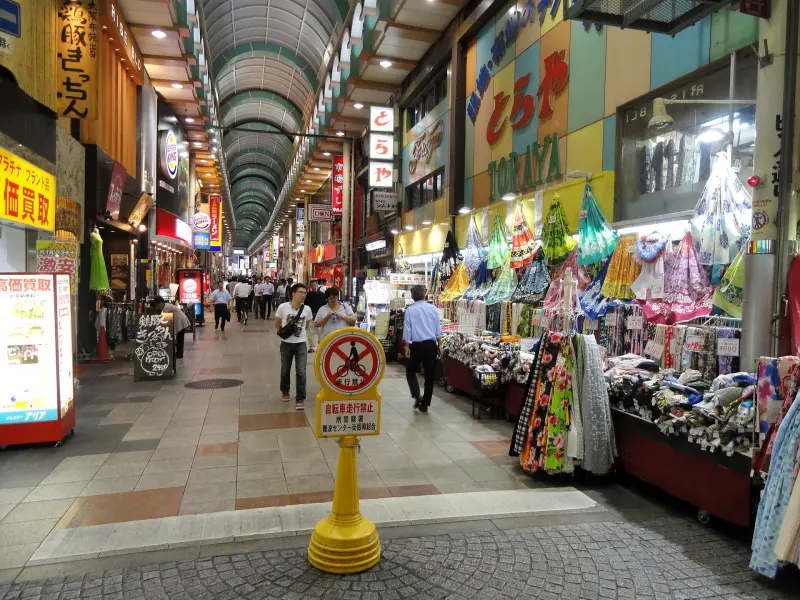
A canal-side street in Namba lined with mechanical signs, the running Glico man among them, and the densest run of cheap food in the country. Shinsaibashi's covered shopping arcade runs north from the same corner.
Photograph the Glico sign from Ebisu bridge
Eat takoyaki from a street stall
Walk the Shinsaibashi arcade
Osaka
A last Japanese breakfast, then the run out across the bay to the airport.
Day 7
Check out and fly home from Kansai
Breakfast, then check out by 11 AM. You are driven out to Kansai International for the flight home. If your flight is in the evening we can hold luggage at the hotel and you can spend the morning in Namba — say so in advance and we will arrange it.
Starts from Hotel Namba Riverside, ends at Kansai International Airport, covering around 52 km in an estimated 1h 10m.
Airport pick-up at Narita and drop at Kansai
× 2
Full-day Mount Fuji and Hakone tour
Kyoto full-day sightseeing
Kyoto to Nara to Osaka transfer with sightseeing
The fine print, clearly
What’s included
Inclusions
Six nights of accommodation in the selected hotel category, three nights in Tokyo, two in Kyoto and one in Osaka.
Daily breakfast at the hotel.
A seven-day ordinary-class Japan Rail Pass per traveller, activated on arrival.
Reserved Shinkansen seats from Tokyo to Kyoto on a Hikari service, covered by the rail pass.
Airport transfers and the Fuji–Hakone, Kyoto and Nara–Osaka touring days by private air-conditioned vehicle with an English-speaking guide.
Hakone ropeway tickets and the Owakudani stop as per the itinerary.
24×7 destination support for the whole trip.
Exclusions
International airfare to and from Japan.
Japan tourist visa fees and the associated service charges.
Travel insurance, which is strongly recommended and must be arranged before departure.
Nozomi and Mizuho Shinkansen services, which the Japan Rail Pass does not cover and which are charged separately if you choose one.
Theme park and paid attraction tickets not listed above, including Tokyo Disneyland, Tokyo DisneySea, Universal Studios Japan and teamLab.
Lunch, dinner and anything ordered outside the hotel breakfast.
Personal expenses such as laundry, tips, shopping and coin-locker charges.
Good to know
Policies
Payment policy
50% of the package cost is needed at the time of booking to confirm it.
The remaining 50% must be cleared at least 30 days before departure.
Cherry blossom season (late March to early April) and the autumn colour season (November) need full payment at booking.
The booking is confirmed only once the advance payment reaches us and the rail pass is issued.
Payment by bank transfer or UPI.
Cancellation policy
0–15 days before departure: 100% of the booking amount is charged.
16–30 days before departure: 70% of the booking amount is charged.
31–45 days before departure: 40% of the booking amount is charged.
A minimum cancellation charge of 15% applies in all cases.
No refund for unused nights, unused rail pass days or an early check-out.
Cherry blossom season (20 March – 10 April) and November: no refund on cancellation.
Important information
Indian passport holders need a Japan tourist visa. It is a physical sticker stamped into the passport, applied for through the authorised visa centre with the passport surrendered for the duration, so allow three to four weeks before departure.
Hotel rooms in Japan are noticeably smaller than the Indian equivalent of the same star rating. Twin rooms are compact, luggage space is limited, and a third bed is rarely possible — we book two people per room.
The Japan Rail Pass must be activated at a JR office on arrival and used within seven consecutive days. Carry your passport when you activate it.
Cherry blossom in late March and early April and autumn colour in November are the two busiest windows. Hotels and reserved seats sell out months ahead, so book early.
Carry some cash. Cards are widely accepted in cities, but small shops, shrines and rural stops are often cash-only.
Shoes come off at temple halls, some restaurants and any traditional accommodation. Slip-on footwear makes the days easier.
 Easy Holiday